
A report cited by The Citizen Business examines proposals for mandatory medical aid participation among people earning more than R99,000, questioning who would benefit. According to the report, compulsion would have to be paired with affordability measures and accessible benefit options. The discussion centres on higher-income earners and the design of medical aid coverage rather than confirming any final policy.
AI summary. Verify with the original source.
Read full story at The Citizen Business ↗
Listen
Unlock audio summaries, audio summaries, AI chat, Wikipedia facts, and ad-free reading.
$3.99 / month · cancel anytime
Go PremiumBackground facts
Unlock wikipedia facts, audio summaries, AI chat, Wikipedia facts, and ad-free reading.
$3.99 / month · cancel anytime
Go PremiumSimilar stories
A report by HFA estimates that 8.79 million South Africans who earn above the tax threshold are not covered by medical schemes, leaving a large share of working people without private healthcare cover. According to the report, medical scheme contributions are rising faster than many household incomes, making cover increasingly unaffordable and keeping millions of employed South Africans outside the private healthcare system.
IOL·September 8, 2026 at 8:30 AM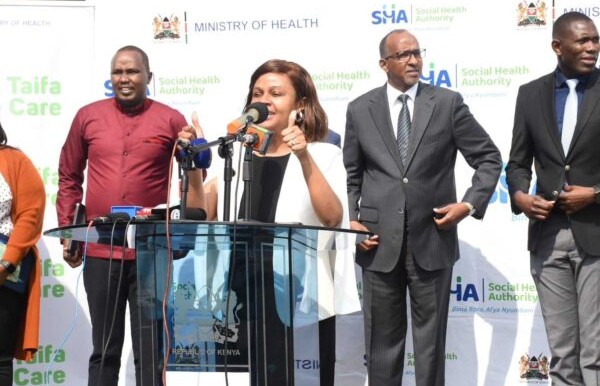
The government has allocated Sh4 billion to settle claims from hospitals under the National Hospital Insurance Fund (NHIF). According to SHA CEO Mercy Mwangangi, eligible facilities will receive payments only after completing a mandatory sign-off process that confirms their verified claims have been fully settled.
Eastleigh Voice·July 5, 2026 at 11:20 AM
Economic Freedom Fighters leader Julius Malema has proposed that South African pensioners receive a monthly grant of R4,500, according to SABC Politics. The report gives no details on eligibility, funding, timing, or whether the proposal has formal government backing; it is framed as a political call to raise support for older people.
SABC Politics·September 5, 2026 at 2:25 PMJubilee Health Insurance is introducing an instalment payment model in Nairobi to make health insurance more accessible to uninsured Kenyans. The company believes that the payment structure, rather than the overall cost, is a significant barrier for many individuals seeking health coverage. This initiative aims to help those who desire insurance but find it difficult to pay upfront costs.
Khusoko·July 4, 2026 at 1:08 PM
Questions have been raised over whether the South African Social Security Agency (SASSA) could run out of money to pay grant beneficiaries, according to The South African. The report notes that SASSA depends on taxpayer funding to sustain its social grant payments, and suggests that persistently low wages combined with high unemployment could shrink the tax base supporting the system. This, the report argues, could place pensioners and other vulnerable grant recipients at risk if funding pressures intensify.
The South African·September 7, 2026 at 12:38 PM
The Council for Medical Schemes has upheld a 9.5% increase in contributions for the Government Employees Medical Scheme (GEMS), despite concerns regarding the potential impact of reducing the contribution. This decision reflects ongoing regulatory oversight in the medical schemes sector.
The Citizen Business·July 1, 2026 at 11:59 AM