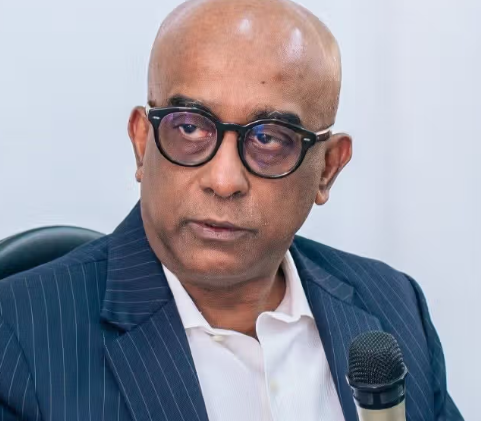
The World Bank has identified Nigeria's primary fiscal challenge as weak revenue mobilisation rather than high levels of debt. Mathew Verghis, the World Bank Country Director for Nigeria, emphasized the need for the government to focus on enhancing revenue generation to foster sustainable economic growth during an interview on Channels Television.
AI summary. Verify with the original source.
Read full story at Vanguard Business ↗
Listen
Unlock audio summaries, audio summaries, AI chat, Wikipedia facts, and ad-free reading.
$3.99 / month · cancel anytime
Go PremiumBackground facts
Unlock wikipedia facts, audio summaries, AI chat, Wikipedia facts, and ad-free reading.
$3.99 / month · cancel anytime
Go PremiumCovered by 2 sources
- Information Nigeria, Editor
- Vanguard Business, Nwafor
Similar stories
Nigeria is facing significant challenges, including rising insecurity, economic hardship, unemployment, weak infrastructure, declining public trust, and institutional weaknesses. These issues are attributed to decades of poor policy choices, weak governance, corruption, and inconsistent policy implementation. According to Nairametrics, these structural warning signs require urgent attention as many of the challenges are self-inflicted.
Nairametrics·June 24, 2026 at 1:18 PM
The Federal Government of Nigeria has emphasized the importance for African nations to enhance domestic revenue generation and decrease reliance on foreign aid. This stance was presented by Finance Minister Taiwo Oyedele, who stated that sustainable development cannot be achieved solely through external assistance. The remarks were made during a recent address to African leaders.
Ripples Nigeria·June 24, 2026 at 7:33 PM
The International Monetary Fund (IMF) has reported that the Federal Government of Nigeria did not include public expenditure amounting to approximately N8.8 trillion, or 2% of the country's Gross Domestic Product (GDP), in its recent national budgets. This omission has led to a discrepancy between the reported fiscal deficit and the actual financing requirements of the country, according to the IMF's Resident Representative.
Vanguard Business·July 2, 2026 at 5:06 AM
The Federal Government of Nigeria has emphasized the need for enhanced development finance and increased private capital mobilization to achieve its goal of a $1 trillion economy. Officials stated that relying solely on public funds is insufficient for the country's developmental plans. This announcement was made during the Bank of Industry's Development Partners’ Roundtable and the presentation of the 2025 Annual Development Impact Report in Abuja.
Vanguard Business·July 3, 2026 at 5:57 AM
New data from the Central Bank of Nigeria (CBN) indicates a significant increase of N17.4 trillion in federal government borrowing, which raises concerns about the growing public sector debt and the potential impact on private sector credit availability.
Punch·June 25, 2026 at 12:21 AM
Nigeria's Finance Minister, Mr. Oyedele, has clarified that the Federal Government does not engage in a 'shadow budget' or spend public funds outside the established constitutional and statutory framework for public finance. This statement aims to dispel any misconceptions regarding the government's financial operations.
Premium Times Business·July 5, 2026 at 12:24 PM