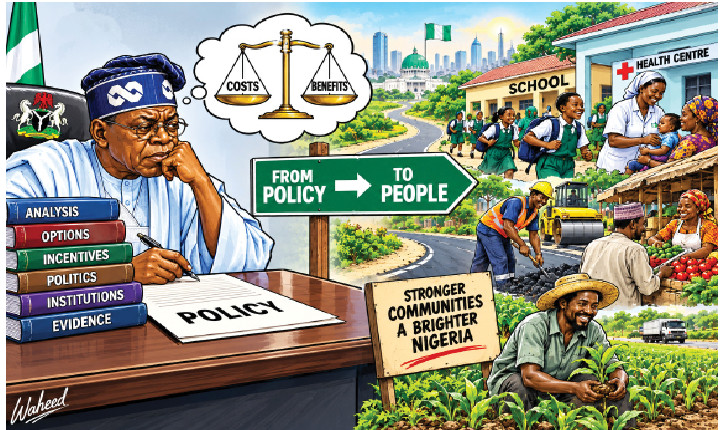
A Leadership Nigeria column continues its argument that public policy debate in Nigeria is conducted at the wrong altitude, focusing on abstract national issues rather than citizens' daily experiences. The writer notes that Nigerians encounter the state most directly through schools, primary health centres, rural roads, markets, transport systems, environmental services and local government offices. The column argues that policy problems must first be understood at this grassroots level before effective solutions can be designed.
AI summary. Verify with the original source.
Read full story at Leadership (NG) ↗
Listen
Unlock audio summaries, audio summaries, AI chat, Wikipedia facts, and ad-free reading.
$3.99 / month · cancel anytime
Go PremiumBackground facts
Unlock wikipedia facts, audio summaries, AI chat, Wikipedia facts, and ad-free reading.
$3.99 / month · cancel anytime
Go PremiumSimilar stories

A Daily Trust opinion/feature piece highlights SARMAAN’s door-to-door community health outreach in northern Nigeria, framing front-door visits by health workers as consequential for children’s wellbeing. It says millions of children have been reached and argues this model belongs in the global public-health conversation, emphasizing household-level contact over hospitals, ministries, or conferences. The blurb does not provide outcomes, funding, dates beyond publication, or independent verification, so claims about scale and significance remain attributable to the source.
Daily Trust·September 7, 2026 at 3:21 PM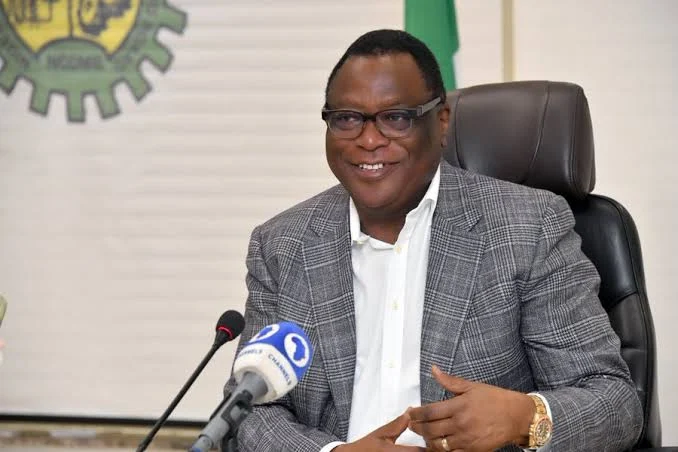
African nations are increasingly adopting Nigeria's local content blueprint, with the Nigerian Content Development and Monitoring Board (NCDMB) being recognized as the sole agency responsible for local content in the country. This shift reflects a broader trend of evolving from policy frameworks to institutional practices in local content development across the continent.
PM News (NG)·June 25, 2026 at 6:40 AM
According to ThisDay Live, a long-standing barrier to agricultural development is the disconnect between policymakers and grassroots farmers. The outlet says policy decisions are often designed in urban administrative centres without real-time ground-level data or direct consultation with farmers, leaving implementation poorly matched to field realities and weakening outcomes for productivity, resilience and rural livelihoods across the agricultural sector.
ThisDay Live·September 8, 2026 at 1:26 AM
Nigeria is facing significant challenges, including rising insecurity, economic hardship, unemployment, weak infrastructure, declining public trust, and institutional weaknesses. These issues are attributed to decades of poor policy choices, weak governance, corruption, and inconsistent policy implementation. According to Nairametrics, these structural warning signs require urgent attention as many of the challenges are self-inflicted.
Nairametrics·June 24, 2026 at 1:18 PM
PM News argues in an editorial that ahead of Nigeria’s 2027 elections, voters need concrete solutions rather than political theatre. It says security should be central to campaigns, citing public concern over kidnapping, banditry and attacks nationwide. The editorial urges politicians to move beyond general promises to fight insecurity and explain specifically how they would protect lives and property.
PM News (NG)·September 7, 2026 at 7:40 PM
An article published by Punch examines the tendency of Nigerian political interviews to descend into attacks when politicians are confronted with tough questions. The piece analyses this recurring trend and explores its implications for democratic accountability and political discourse in Nigeria, highlighting concerns about how elected officials respond to critical scrutiny from journalists and interviewers.
Punch·September 8, 2026 at 12:01 AM