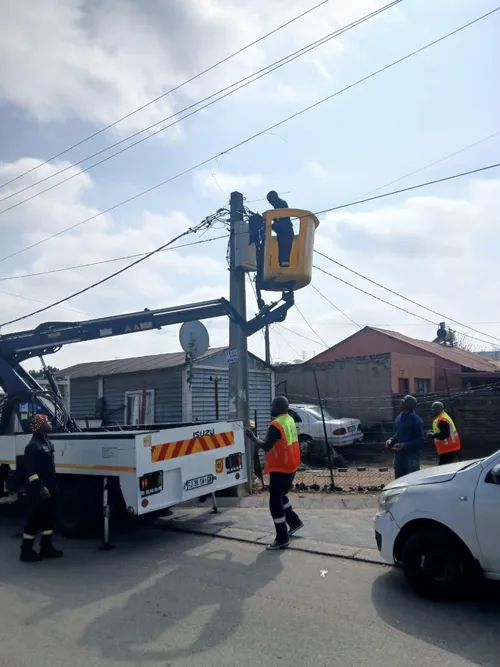
Residents of Tshepisong, west of Johannesburg, have explained why they are refusing to pay for electricity, in a report published by Sowetan. The community's stance comes amid ongoing tensions over power supply in the area. According to City Power, illegal connections and vandalism of infrastructure are major obstacles preventing the utility from delivering reliable services to residents. The standoff highlights broader challenges facing Johannesburg's electricity provider as it grapples with non-payment and damaged networks in affected communities.
AI summary. Verify with the original source.
Listen
Unlock audio summaries, audio summaries, AI chat, Wikipedia facts, and ad-free reading.
$3.99 / month · cancel anytime
Go PremiumBackground facts
Unlock wikipedia facts, audio summaries, AI chat, Wikipedia facts, and ad-free reading.
$3.99 / month · cancel anytime
Go PremiumSimilar stories

Pensioners in District Six are reportedly facing monthly electricity bills of R2,000 and experiencing sudden disconnections due to a billing dispute related to municipal arrears. This situation has forced land claimants to make difficult choices between paying for food and electricity, according to TimesLIVE.
TimesLIVE·June 25, 2026 at 2:30 AM
According to Moneyweb, recent electricity price hikes are significantly impacting families, pushing them further into financial difficulties. The focus has shifted from issues of load shedding to the increasing costs of electricity, which are becoming unaffordable for many households.
Moneyweb·July 5, 2026 at 2:00 AMCity Power, Johannesburg's municipal electricity utility, removed approximately 180kg of aluminium cables and three electricity poles, valued at around R200,000, during a joint operation targeting illegal connections in Alexandra. The operation formed part of ongoing efforts by the utility to clamp down on unlawful electricity infrastructure and illegal connections in the area, which place strain on the grid and pose safety risks to residents, according to IOL.
IOL·September 9, 2026 at 1:54 PM
South African electricity consumers may be paying up to 25% more for prepaid electricity through unlawful charges imposed by rogue vendors, according to Moneyweb. Government is seeking to clamp down on these vendors and bring the prepaid electricity resale market under control. The report raises questions about whether households are being overcharged when purchasing electricity through third-party sellers rather than directly from municipalities or Eskom.
Moneyweb·September 8, 2026 at 4:35 AMDespite a reduction in load shedding and fewer power cuts in South Africa, electricity bills are increasing. This rise in costs is attributed to significant tariff increases approved by the National Energy Regulator, leading to confusion among consumers about why prices are climbing when the power supply is more stable.
IOL·June 25, 2026 at 3:50 AMAccording to IOL, Eskom says customers who generate or buy their own electricity may still contribute through network and fixed charges as falling sales volumes reshape its tariff strategy. The report indicates the utility is looking to recover grid-related costs even as more households and businesses adopt solar or alternative supply. Details on specific charge levels, implementation timing, and regulatory approval were not provided in the feed blurb.
IOL·September 8, 2026 at 9:17 AM