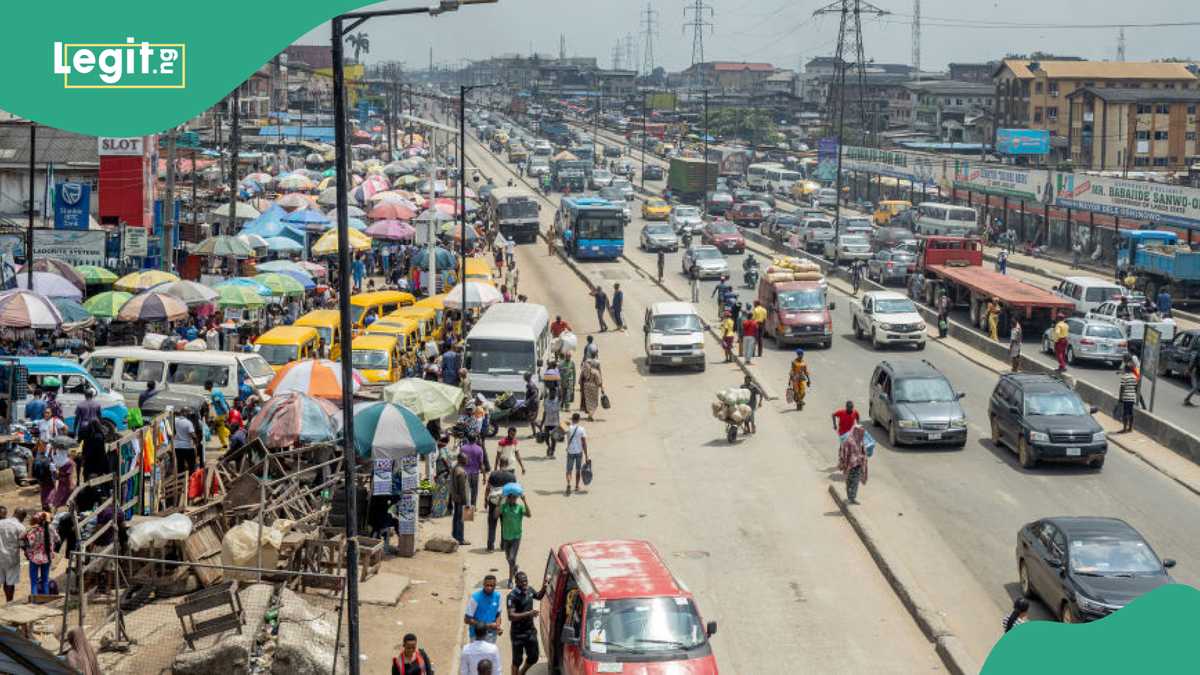
According to the CPPE, the Nigerian economy is expected to experience stronger growth in the second half of 2026. However, the organization cautions that increasing political activities related to the 2027 elections may pose risks to inflation, necessary reforms, and overall economic stability.
AI summary. Verify with the original source.
Listen
Unlock audio summaries, audio summaries, AI chat, Wikipedia facts, and ad-free reading.
$3.99 / month · cancel anytime
Go PremiumBackground facts
Unlock wikipedia facts, audio summaries, AI chat, Wikipedia facts, and ad-free reading.
$3.99 / month · cancel anytime
Go PremiumSimilar stories

As Nigeria enters the second half of 2026, questions arise regarding the effectiveness of the country's record budget, which was recently signed by President Bola Ahmed Tinubu. Festus Akanbi reviews an analysis by BudgIT that highlights the challenges and concerns surrounding the budget's implementation and its potential impact on the economy.
ThisDay Live·July 5, 2026 at 1:43 AM
An influential politician from Ondo has made a prediction regarding the outcome of the 2027 presidential election in Nigeria, expressing optimism about the country's political future, according to Legit.ng.
Legit.ng·July 5, 2026 at 2:21 PM
Nedbank announced a downgrade to its 2026 domestic economic output outlook, attributing this change to a mixed economic environment observed in the first five months of the year. The bank also indicated that the central bank is expected to maintain current interest rates in response to rising inflation.
TimesLIVE·June 24, 2026 at 4:33 PM
According to Nairametrics, Nigeria's business environment maintained an expansion status in June 2026, with a business confidence index of 104.6. However, this represents a slowdown in growth compared to the previous year, as businesses faced challenges from high operating costs, limited credit availability, and infrastructure issues.
Nairametrics·July 5, 2026 at 1:09 AM
The World Bank has indicated that the economic recovery in Sub-Saharan Africa is losing momentum, projecting a growth rate of 4.1 percent for 2026, the same as in 2025. This figure represents a downward revision of 0.3 percentage points from a previous forecast of 4.4 percent, as noted in the latest Africa Economic Update released in April.
TechTrends KE·June 24, 2026 at 4:20 PM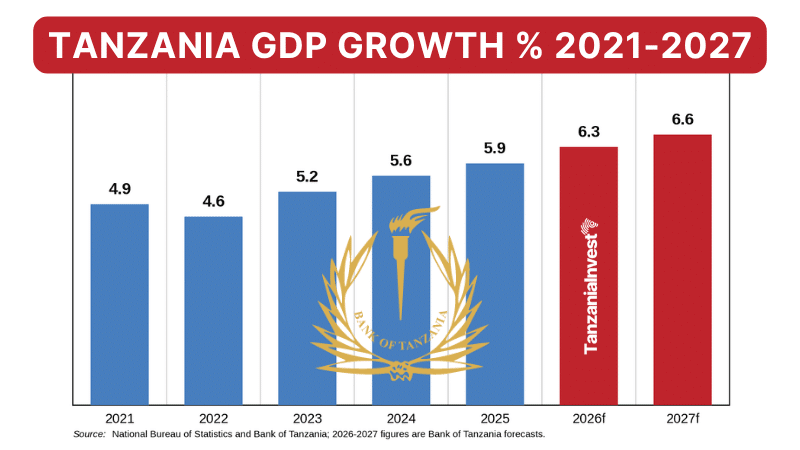
The Central Bank of Tanzania has projected a GDP growth of 6.3% for 2026 and 6.6% for 2027, driven by public and private investments as well as exports. According to its latest Monetary Policy Statement for 2026/27, key sectors contributing to this growth include agriculture, mining, tourism, and construction. Inflation is expected to rise but will remain within the target range of 3-5%.
TanzaniaInvest·June 18, 2026 at 2:26 AM