
In rural Kenya, over 2,000 primary schools are at risk of closure due to a significant decline in student enrolment, with reports indicating that there are now more cows than pupils in some areas. This situation raises concerns about the future of education in these regions, as communities grapple with the implications of dwindling school attendance.
AI summary. Verify with the original source.
Read full story at BBC World ↗
Listen
Unlock audio summaries, audio summaries, AI chat, Wikipedia facts, and ad-free reading.
$3.99 / month · cancel anytime
Go PremiumBackground facts
Unlock wikipedia facts, audio summaries, AI chat, Wikipedia facts, and ad-free reading.
$3.99 / month · cancel anytime
Go PremiumCovered by 2 sources
- Upland Media (UG), Lubangakene Cyrus
- BBC World
Similar stories
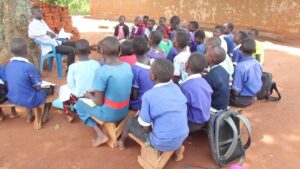
In Kayunga District, primary school pupils face severe learning conditions, often cramming four or five students onto desks meant for two, while others sit on bare mats. Rain disrupts lessons, forcing children into overcrowded rooms. At Nongo Church of Uganda Primary School, headteacher Juliet Nantume highlights the ongoing struggle, noting that the school has not received any support from the district education office despite requests made last year. The desks in use were purchased between 2004 and 2009.
The Scribe (UG)·July 3, 2026 at 10:35 AM
The Ministry of Education has issued a ban on schools from purchasing commercial exams, as stated in a circular dated June 30, 2026. The ministry indicated that this practice imposes illegal levies on learners and undermines classroom learning. It also reminded school heads that the ban on commercial examinations is applicable across all pre-primary and primary institutions.
The Kenya Times·July 4, 2026 at 8:15 AM
The Kenya National Examinations Council (KNEC) has instructed primary and junior school principals nationwide to verify the upload of KPSEA and KJSEA assessment scores before the impending deadline. This directive aims to ensure that all assessment scores are accurately recorded and submitted as required.
Soko Directory·July 4, 2026 at 6:51 AM
Secondary school principals in Kenya are advocating for an increase in school fees, citing that the existing funding model is inadequate due to economic changes and the costs associated with the Competency-Based Education (CBE). They propose a unit-cost formula to determine fees based on the actual expenses for services per student, which include tuition, meals, and accommodation. Currently, the government allocates a flat capitation grant of Sh22,244 per learner annually for secondary education.
Nairobi Wire·June 25, 2026 at 3:45 AM
In Kenya, nearly a third of the country's agricultural land is now controlled by individuals living in urban areas, a trend that has developed over the past two decades. This phenomenon is also observed in other African nations such as Ghana, Malawi, Tanzania, and Zambia. Urban residents are increasingly investing in rural farmlands, motivated by rising food prices, liberalized agricultural markets, and the growing demand for food in urbanizing regions, according to The Conversation Africa.
The Conversation Africa·June 29, 2026 at 2:22 PM
Sixteen pupils, aged between 15 and 18, died in a dormitory fire at Utumishi Girls' School last month. In response, Kenyan authorities have announced plans to charge students with murder in connection to the incident, according to BBC World.
BBC World·June 25, 2026 at 3:56 AM