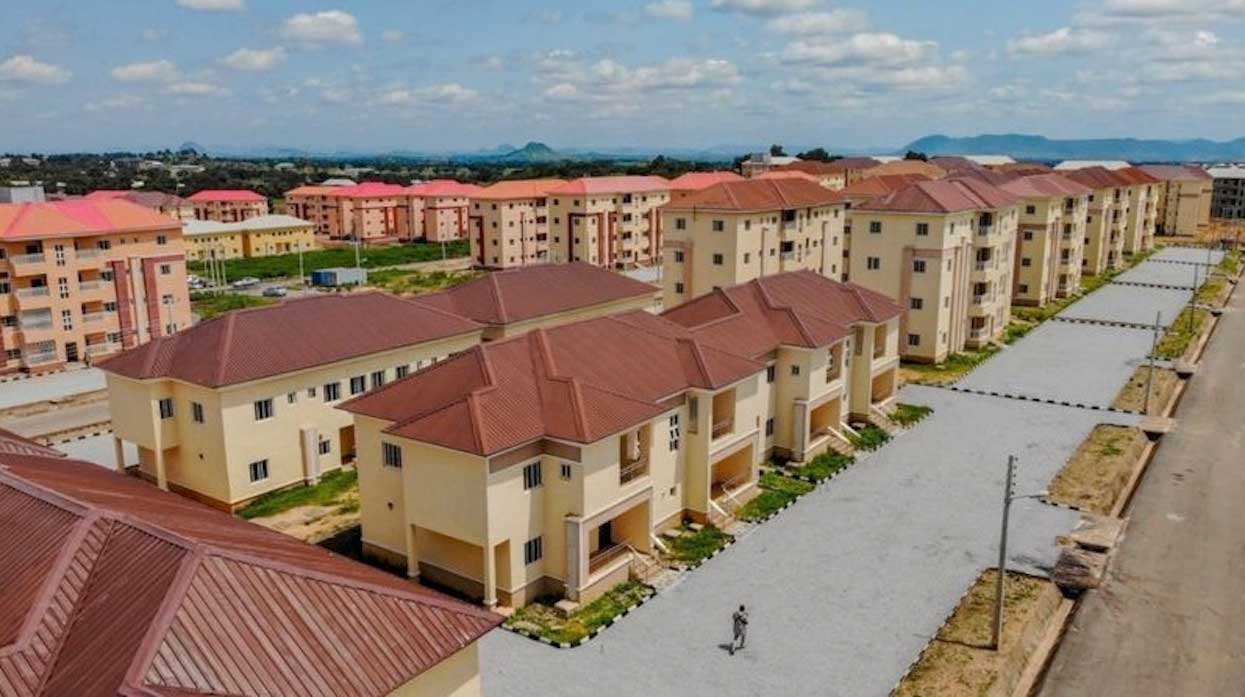
Nigeria's high interest-rate environment is placing growing pressure on property developers, according to Leadership, with those dependent on bank loans struggling to service facilities totalling N814.996 billion. Commercial bank lending rates currently range between 23 and 38 per cent depending on the lender, facility and borrower risk. The elevated borrowing costs are eroding project returns and threatening the completion of housing schemes across the country.
AI summary. Verify with the original source.
Read full story at Leadership (NG) ↗
Listen
Unlock audio summaries, audio summaries, AI chat, Wikipedia facts, and ad-free reading.
$3.99 / month · cancel anytime
Go PremiumBackground facts
Unlock wikipedia facts, audio summaries, AI chat, Wikipedia facts, and ad-free reading.
$3.99 / month · cancel anytime
Go PremiumSimilar stories

The Manufacturers Association of Nigeria (MAN) has criticized the average prime lending rates of 27 percent and maximum lending rates of 36.5 percent charged by major commercial banks as of May 2026, labeling them as exploitatively high for the manufacturing sector.
Tribune Online (NG)·June 25, 2026 at 7:21 AM
Nigeria's non-performing loans (NPLs) ratio increased to 9.85% in February 2026, nearly double the acceptable threshold of 5%. This rise followed the Central Bank of Nigeria's (CBN) withdrawal of regulatory forbearance, which led lenders to reclassify previously deferred exposures. The information was detailed in the CBN's February 2026 Economic Report released on Wednesday.
Leadership (NG)·June 25, 2026 at 5:42 AM
A member of the Monetary Policy Committee (MPC) has called on the Central Bank of Nigeria (CBN) to implement further actions aimed at lowering lending rates for both households and businesses. This appeal comes in the context of recent recapitalization efforts within the banking sector.
Nairametrics·July 4, 2026 at 2:05 PM
Commercial bank credit to Nigeria's manufacturing sector has decreased by N1.92 trillion, attributed to funding gaps and high lending rates that are hindering access to finance for manufacturers, according to Punch.
Punch·June 25, 2026 at 2:20 AM
Standard Bank reported that client confidence has been negatively impacted by ongoing conflicts in the Middle East and rising inflation. Additionally, high interest rates contributed to the bank's performance, leading to only 'moderate growth' in its home loan portfolio.
The Citizen Business·June 23, 2026 at 9:47 AMNigeria's banking system recorded a liquidity surplus of N4.66 trillion last week, according to Punch. The surplus reportedly eased funding pressure across banks and contributed to a lower overnight lending rate, improving conditions within the country's financial system. The development suggests banks had more funds available than needed to meet their obligations during the period, reducing the cost of short-term borrowing between institutions. Further details on the figures and their implications were not provided in the available report.
Punch·September 8, 2026 at 12:43 AM