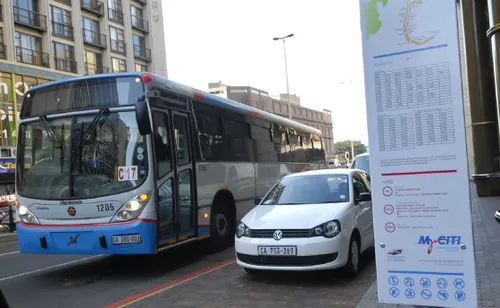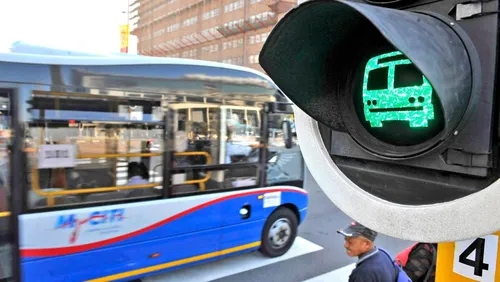
Starting July 1, 2026, commuters in Cape Town will experience fare increases of up to 45 percent on the MYCiTi bus service. This rise in fares is attributed to escalating operational costs and a decrease in national funding, according to IOL.
AI summary. Verify with the original source.
Listen
Unlock audio summaries, audio summaries, AI chat, Wikipedia facts, and ad-free reading.
$3.99 / month · cancel anytime
Go PremiumBackground facts
Unlock wikipedia facts, audio summaries, AI chat, Wikipedia facts, and ad-free reading.
$3.99 / month · cancel anytime
Go PremiumCovered by 2 sources
Similar stories
Hout Bay activist Roscoe Jacobs has raised concerns about the City of Cape Town's proposed 50% fare increase for the MyCiTi bus service, stating it could significantly affect working-class commuters. A petition is currently gaining support in the community, aiming to secure affordable public transport options.
IOL·June 25, 2026 at 6:00 AM
South African motorists will experience significant relief at the fuel pumps starting Wednesday, 1 July 2026, as substantial cuts to petrol prices have been confirmed.
The South African Biz·June 30, 2026 at 6:22 AM
The minibus taxi industry in South Africa is a significant economic force, transporting eight out of every ten public transport commuters daily. Despite its size and influence, the industry reportedly does not pay taxes directly, raising questions about its economic impact and regulatory oversight, according to Tanzania Times.
Tanzania Times·July 2, 2026 at 7:26 PM
Secondary school principals in Kenya are advocating for an increase in school fees, citing that the existing funding model is inadequate due to economic changes and the costs associated with the Competency-Based Education (CBE). They propose a unit-cost formula to determine fees based on the actual expenses for services per student, which include tuition, meals, and accommodation. Currently, the government allocates a flat capitation grant of Sh22,244 per learner annually for secondary education.
Nairobi Wire·June 25, 2026 at 3:45 AMA recent drop in fuel prices has provided some relief to South African households; however, they continue to face significant challenges due to rising unemployment, high food costs, and increasing municipal bills. This situation leaves many families in a precarious financial position, struggling to manage their expenses amidst these pressures.
IOL·July 5, 2026 at 4:00 AM
Domestic air travel fares in Nigeria increased by 20.8 percent year-on-year in May 2026, reaching N157,552 compared to N130,361 in May 2025, according to the National Bureau of Statistics (NBS). The NBS also reported fare increases across other transport categories in its latest Transport Fare Watch.
Vanguard Business·June 30, 2026 at 6:37 AM