
According to Business Times, Africa is investing billions in infrastructure projects such as transport corridors, high-speed rail networks, and hydropower. However, the article argues that the continent's most significant infrastructure gap lies not in physical structures like railways or roads, but in human capital development.
AI summary. Verify with the original source.
Read full story at Business Times (UG) ↗
Listen
Unlock audio summaries, audio summaries, AI chat, Wikipedia facts, and ad-free reading.
$3.99 / month · cancel anytime
Go PremiumBackground facts
Unlock wikipedia facts, audio summaries, AI chat, Wikipedia facts, and ad-free reading.
$3.99 / month · cancel anytime
Go PremiumSimilar stories

Africa is projected to become home to the world's largest labor force, but Marcia Ashong-Sam, Founder and CEO, emphasizes that leadership will be the key factor in shaping the continent's future, rather than merely the size of the workforce.
CIO Africa·June 29, 2026 at 8:33 AM
According to TimesLIVE, writer Murendeni Liphadzi argues that South Africa's significant infrastructure challenges stem from failures in leadership, oversight, and execution rather than issues related to concrete or materials. The piece emphasizes the importance of effective leadership in addressing infrastructure delivery.
TimesLIVE·June 25, 2026 at 2:30 AM
Africa's reliance on imported fuel is particularly pronounced in the transport sector, where road transport consumes about 80 percent of the continent's imported fuel. This dependence significantly impacts the economy, as transport costs can account for up to 45 percent of the final retail price of staple foods, highlighting both a challenge and an opportunity for energy solutions in the region.
Tanzania Times·July 5, 2026 at 10:58 AM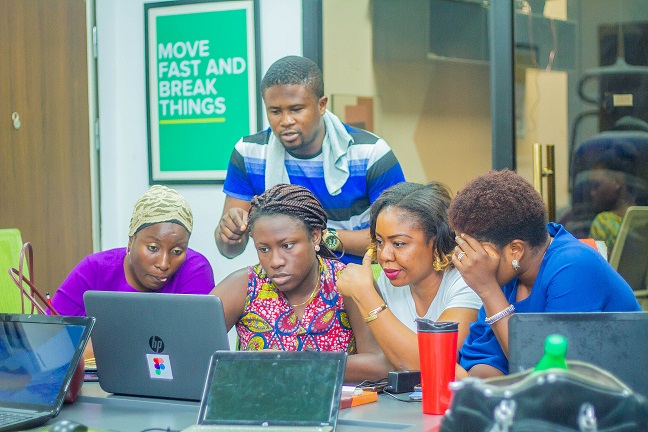
As artificial intelligence influences the future job market, there is a concern regarding the connection between education, entrepreneurship, industry, and finance in Africa. This disconnection may hinder capable young individuals from effectively participating in the digital economy. According to Techpoint Africa, addressing systemic issues could be more crucial than merely equipping the next generation with digital skills.
Techpoint Africa·June 29, 2026 at 7:42 AM
According to TimesLIVE, Africa's economic growth is significantly dependent on the ability of small and medium-sized enterprises (SMEs) to efficiently manage financial transactions, endure economic shocks, and engage fully in the market. The development of robust financial systems is essential for these businesses to thrive and contribute to a sustainable economic transition.
TimesLIVE·July 4, 2026 at 10:00 PM
According to Tanzania Times, landlocked countries in Africa, such as Ethiopia, Uganda, and Rwanda, are experiencing significant economic growth rates of 9.2%, 7.5%, and 7.2% respectively. This trend raises questions for coastal nations about their economic strategies, as these landlocked nations continue to thrive without direct access to coastlines.
Tanzania Times·June 24, 2026 at 7:49 AM