
Despite rising oil wealth in Nigeria, many poor students continue to face financial hardship, prompting renewed scrutiny of the Nigerian Education Loan Fund (NELFUND) and its effectiveness in supporting access to education. According to Legit.ng, the contrast between the country's growing petroleum revenues and the ongoing struggles of disadvantaged students raises fresh questions about whether the fund is fulfilling its intended role in expanding educational opportunities for those most in need.
AI summary. Verify with the original source.
Listen
Unlock audio summaries, audio summaries, AI chat, Wikipedia facts, and ad-free reading.
$3.99 / month · cancel anytime
Go PremiumBackground facts
Unlock wikipedia facts, audio summaries, AI chat, Wikipedia facts, and ad-free reading.
$3.99 / month · cancel anytime
Go PremiumSimilar stories
The Nigerian Education Loan Fund (NELFUND) has dismissed as fake news a circulating image claiming that President Bola Tinubu announced life imprisonment for graduates who fail to repay their student loans. In a post on its official X account, NELFUND said the image, which appeared to show the front page of a newspaper report, was doctored, and urged the public to disregard the claim. The agency did not announce any such penalty for loan defaulters.
The Tide (NG)·September 7, 2026 at 5:44 AM
The National Association of Ogun State Students (NAOSS) has requested an investigation into alleged discrepancies in the disbursement of student loans from the Nigerian Education Loan Fund (NELFUND) at D.S. Adegbenro ICT Polytechnic in Ogun State.
Tribune Online (NG)·June 25, 2026 at 5:35 AM
The Nigerian Education Loan Fund (NELFUND) has condemned unethical practices by some tertiary institutions, including withholding tuition refunds and arbitrarily increasing school charges, despite receiving support from the federal government. This announcement was made in a public notice by the Director of Strategic Communications, Oseyemi Oluwatuyi.
Vanguard Business·June 30, 2026 at 7:00 AM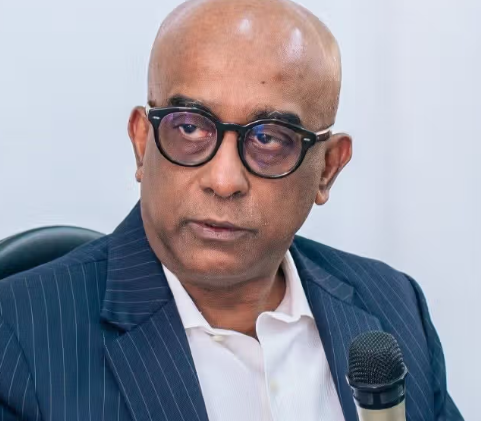
The World Bank has identified Nigeria's primary fiscal challenge as weak revenue mobilisation rather than high levels of debt. Mathew Verghis, the World Bank Country Director for Nigeria, emphasized the need for the government to focus on enhancing revenue generation to foster sustainable economic growth during an interview on Channels Television.
Vanguard Business·July 4, 2026 at 6:54 PM
According to Daily Trust, Nigeria is classified as a technically poor country based on various economic metrics. Many Nigerians are aware of the significant wealth accumulated by a select few who have access to national resources, leading to frustration as they witness a continuation of this trend over the past eight years.
Daily Trust·June 25, 2026 at 12:30 AM
Professor Tunji Ogunyemi of Obafemi Awolowo University, Ile-Ife, has warned that restoring Nigeria's petroleum subsidy regime could severely damage the country's public finances. According to Ripples Nigeria, the economic historian, lawyer and public affairs analyst argued that a return to fuel subsidy payments could lead to the possible financial collapse of more than 15 states in Nigeria's northern region, urging against reversing the subsidy removal policy.
Ripples Nigeria·September 5, 2026 at 5:44 PM