
The article discusses the significance of health data as a public health asset and a strategic resource that influences scientific knowledge, economic value, and technological advancement. It specifically examines Tanzania's position in relation to the America First Global Health Strategy and raises questions about data sovereignty.
AI summary. Verify with the original source.
Read full story at The Chanzo ↗
Listen
Unlock audio summaries, audio summaries, AI chat, Wikipedia facts, and ad-free reading.
$3.99 / month · cancel anytime
Go PremiumBackground facts
Unlock wikipedia facts, audio summaries, AI chat, Wikipedia facts, and ad-free reading.
$3.99 / month · cancel anytime
Go PremiumSimilar stories

In March 2026, clinics in Kenya experienced a sudden disruption in donor funding, leading to stalled supply chains and unanswered questions from programme coordinators. This incident highlighted the reliance of the country's public health infrastructure on external financial support, raising concerns about the implications of the Kenya-US health data deal, according to TechTrends KE.
TechTrends KE·June 23, 2026 at 7:31 AM
Tanzania and the United States have established a five-year health partnership, as reported by The Chanzo. This agreement comes as Tanzania seeks to enhance its diplomatic relations with Washington in light of pressures arising from the fallout of the 2025 election.
The Chanzo·July 2, 2026 at 12:22 PM
The government of President Samia Suluhu Hassan has signed a $3.1 billion health agreement with the United States, but has rejected a provision for disease sample exchange, stating that it will develop that capability domestically.
Nukta Africa·July 2, 2026 at 1:19 PM
According to Daily News, global investors are increasingly choosing Tanzania as a strategic investment destination due to its political stability, access to regional markets, abundant resources, reliable infrastructure, and a supportive government. These factors are seen as more significant than just tax incentives, making Tanzania an attractive option for international manufacturing companies.
Daily News (TZ)·June 25, 2026 at 6:50 AM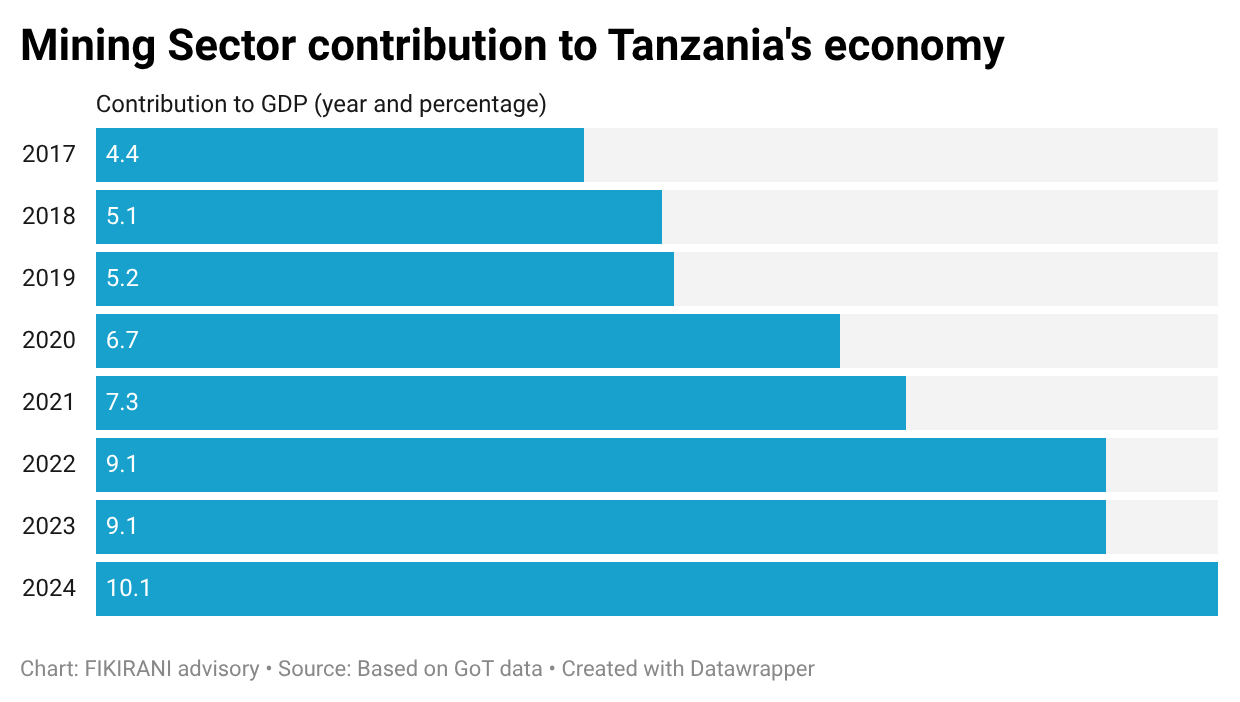
According to The Chanzo, Tanzania has been criticized for concealing mining contracts and diluting standards in its extractives sector, despite being part of the Extractive Industries Transparency Initiative (EITI) for a decade. This raises questions about who benefits from the lack of transparency in the industry.
The Chanzo·June 25, 2026 at 6:14 AM
According to Techpoint Africa, the article argues that public data should be viewed as a national asset rather than a means to generate revenue. It emphasizes the importance of establishing a trusted data economy in Kenya that focuses on creating public value from data, rather than exploiting citizens' information for profit.
Techpoint Africa·June 23, 2026 at 10:50 AM