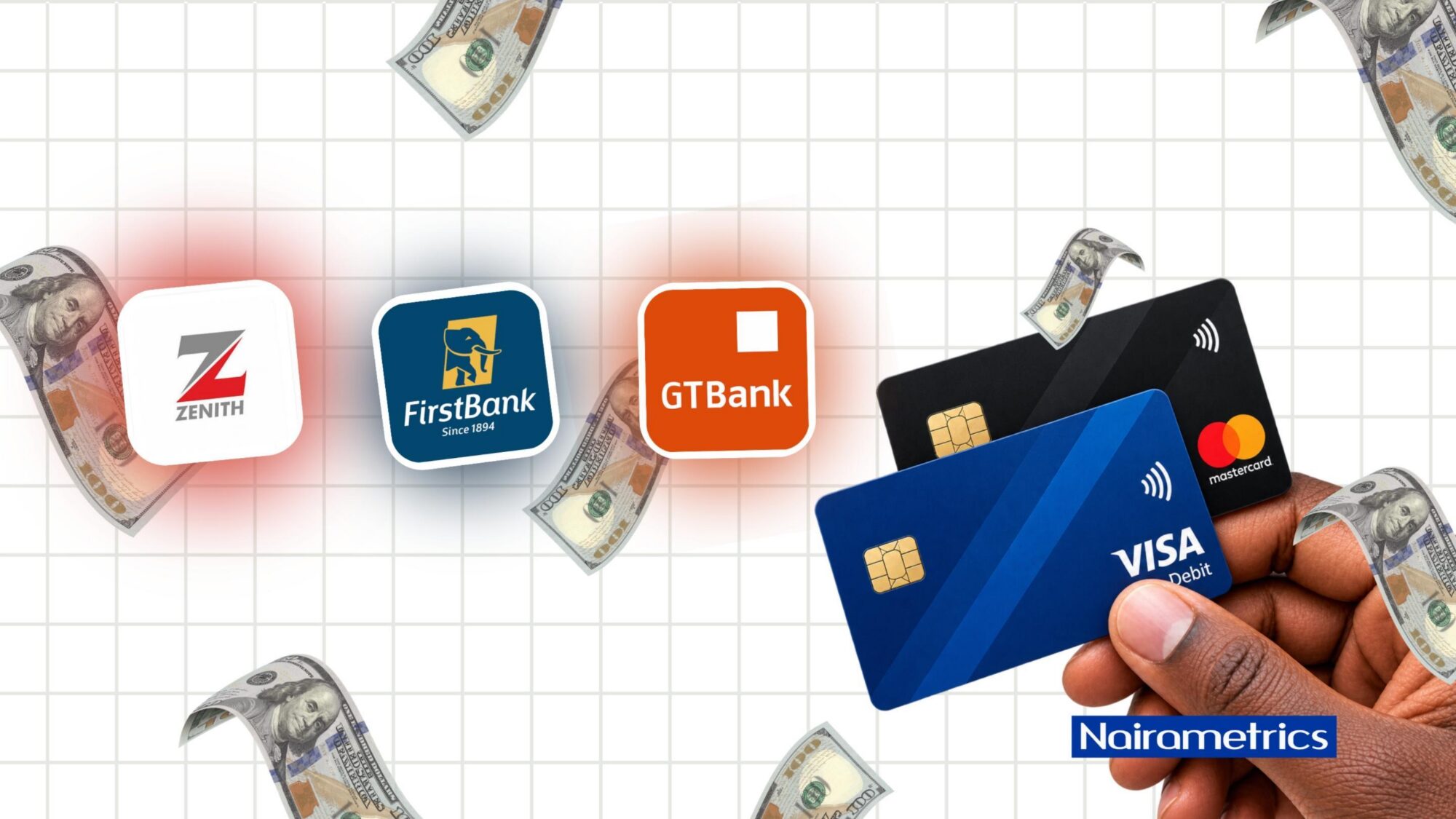
Several major Nigerian banks, including GTCO, FirstBank and Zenith Bank, have raised the dollar spending limits on customers' international transactions, according to Nairametrics. The move follows years of tight restrictions on dollar-denominated payments imposed because of foreign exchange shortages. The report says the easing of FX scarcity has allowed lenders to expand customers' access to international payments once again.
AI summary. Verify with the original source.
Read full story at Nairametrics ↗
Listen
Unlock audio summaries, audio summaries, AI chat, Wikipedia facts, and ad-free reading.
$3.99 / month · cancel anytime
Go PremiumBackground facts
Unlock wikipedia facts, audio summaries, AI chat, Wikipedia facts, and ad-free reading.
$3.99 / month · cancel anytime
Go PremiumSimilar stories

A Nigerian bank has announced the introduction of new charges on foreign currency transfers. However, transfers made by customers between their own accounts within the bank will be exempt from these new fees, according to Legit.ng.
Legit.ng·July 5, 2026 at 11:35 AM
Nigeria is advocating for a cross-border payment system that eliminates the need for third-party currencies, according to Techpoint Africa. The discussion includes the recent approval of Yellow Card in Switzerland and Daya's successful fundraising of $2.4 million aimed at developing stablecoin payment infrastructure.
Techpoint Africa·June 25, 2026 at 7:00 AM
According to Punch, Nigeria's top banks raised their technology budgets by 43% in the first quarter of 2026, investing N119 billion in digital infrastructure. This increase aims to enhance services and address the growing demand for digital transactions.
Punch·June 25, 2026 at 12:35 AM
The Nigerian naira has depreciated by at least N9 against the United States dollar at the Central Bank of Nigeria's official foreign exchange window, according to Tribune Online.
Tribune Online (NG)·June 25, 2026 at 7:22 AM
On June 24, 2026, the Nigerian naira experienced its highest depreciation against the dollar in two weeks, according to data from the Central Bank of Nigeria. The official exchange rate reached N1,380.08 per dollar, marking a continued bearish trend for the currency in the foreign exchange market.
Daily Post (NG)·June 24, 2026 at 9:30 PM
According to the Central Bank of Nigeria's monthly economic report for February 2026, net foreign exchange inflow into the economy decreased by 24 percent month-on-month, falling to $6.92 billion from $9.22 billion in January. The report indicated that this decline was driven by various factors, although specific reasons were not detailed in the blurb.
Vanguard Business·June 24, 2026 at 5:50 AM