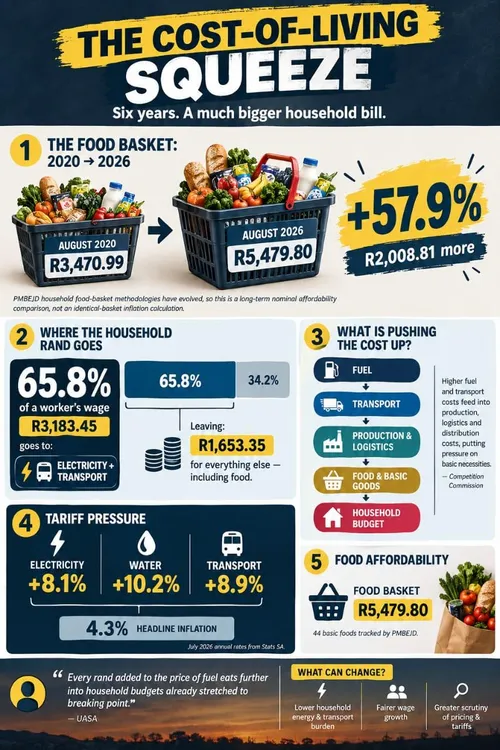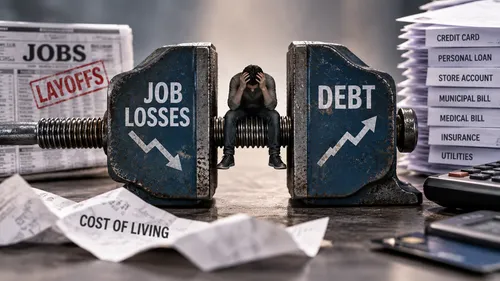
South African households are facing mounting financial pressure as formal-sector jobs disappear while debt levels climb, according to IOL. The report says even comparatively well-paid consumers are struggling to keep up with repayments, leaving families squeezed from both ends by shrinking employment opportunities and rising obligations. The situation highlights growing strain on household finances across the country's formal economy.
AI summary. Verify with the original source.
Listen
Unlock audio summaries, audio summaries, AI chat, Wikipedia facts, and ad-free reading.
$3.99 / month · cancel anytime
Go PremiumBackground facts
Unlock wikipedia facts, audio summaries, AI chat, Wikipedia facts, and ad-free reading.
$3.99 / month · cancel anytime
Go PremiumSimilar stories
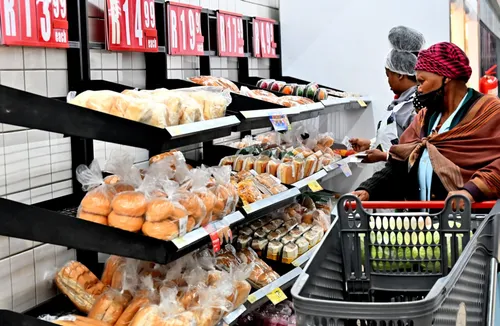
South African households are under severe financial strain as the rising cost of essentials consumes a growing share of monthly incomes, according to IOL. The report indicates that many families are reaching breaking point, with spending on necessities such as food, transport and utilities outpacing earnings. The squeeze on disposable income highlights mounting pressure on consumers already grappling with a tough economic environment, leaving little room for savings or non-essential spending.
IOL·September 8, 2026 at 6:00 AMSouth African households are facing mounting financial strain as the rising costs of food, electricity and transport consume a growing share of shrinking incomes, according to IOL. The report indicates that pensioners and children are among the groups most severely affected by the squeeze. The increasing competition between essential expenses is placing sustained pressure on household budgets across the country, highlighting broader concerns about the cost of living and economic wellbeing in South Africa.
IOL·September 8, 2026 at 4:57 AMA recent drop in fuel prices has provided some relief to South African households; however, they continue to face significant challenges due to rising unemployment, high food costs, and increasing municipal bills. This situation leaves many families in a precarious financial position, struggling to manage their expenses amidst these pressures.
IOL·July 5, 2026 at 4:00 AM
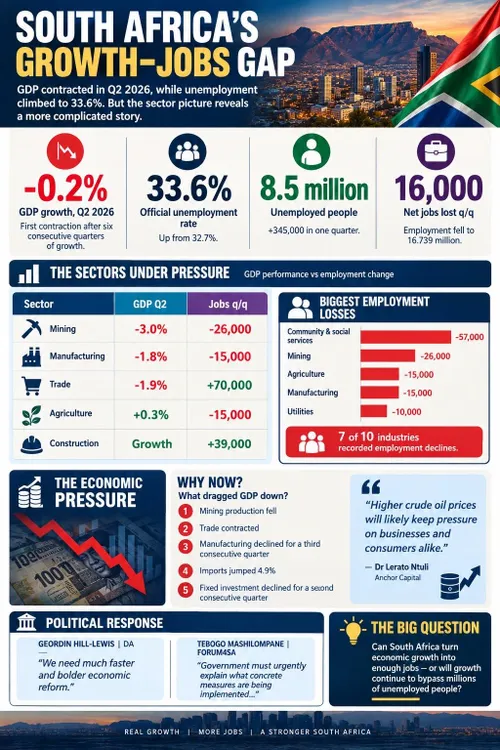
According to The Citizen Business, South Africa has lost 80,000 formal sector jobs over a three-month period, which may be attributed to companies retrenching and shutting down. This significant decline in employment raises concerns about the economic stability in the region.
The Citizen Business·June 30, 2026 at 11:03 AMSouth Africa's economy contracted after six consecutive quarters of growth, according to IOL, highlighting the country's uneven economic recovery and deepening unemployment crisis. The GDP decline underscores persistent structural challenges, including the government's struggle to create sufficient jobs despite earlier signs of momentum. Analysts cited by the publication point to the contraction as evidence that growth remains fragile and unevenly distributed across sectors and regions, raising fresh concerns about the country's ability to address its chronic jobs shortage.
IOL·September 9, 2026 at 6:00 AM
In the second quarter of 2026, South African household finances showed signs of easing, although the ratio of household debt to nominal disposable income increased to 62.2% in the first quarter from 61.8% in the previous quarter, according to The South African Biz.
The South African Biz·July 1, 2026 at 1:07 PM