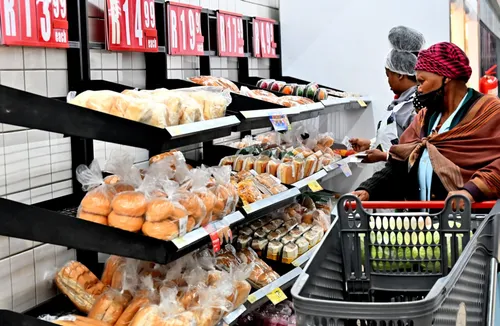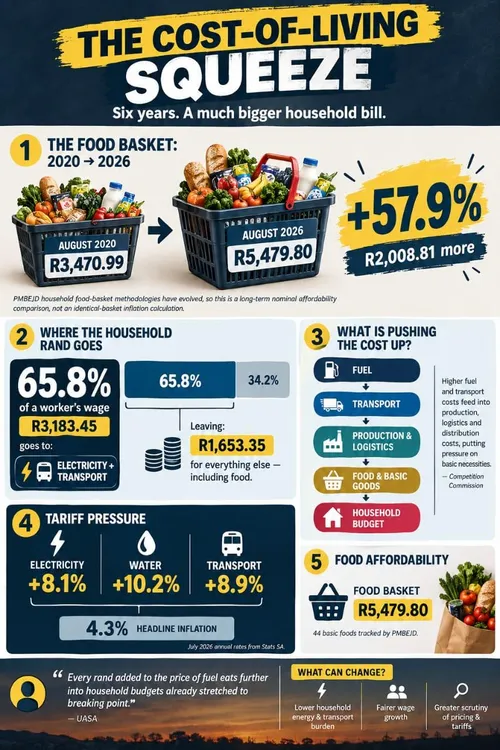
South African households are facing mounting financial strain as the rising costs of food, electricity and transport consume a growing share of shrinking incomes, according to IOL. The report indicates that pensioners and children are among the groups most severely affected by the squeeze. The increasing competition between essential expenses is placing sustained pressure on household budgets across the country, highlighting broader concerns about the cost of living and economic wellbeing in South Africa.
AI summary. Verify with the original source.
Listen
Unlock audio summaries, audio summaries, AI chat, Wikipedia facts, and ad-free reading.
$3.99 / month · cancel anytime
Go PremiumBackground facts
Unlock wikipedia facts, audio summaries, AI chat, Wikipedia facts, and ad-free reading.
$3.99 / month · cancel anytime
Go PremiumSimilar stories
South African households are under severe financial strain as the rising cost of essentials consumes a growing share of monthly incomes, according to IOL. The report indicates that many families are reaching breaking point, with spending on necessities such as food, transport and utilities outpacing earnings. The squeeze on disposable income highlights mounting pressure on consumers already grappling with a tough economic environment, leaving little room for savings or non-essential spending.
IOL·September 8, 2026 at 6:00 AMA recent drop in fuel prices has provided some relief to South African households; however, they continue to face significant challenges due to rising unemployment, high food costs, and increasing municipal bills. This situation leaves many families in a precarious financial position, struggling to manage their expenses amidst these pressures.
IOL·July 5, 2026 at 4:00 AM
South African households are experiencing a two-year high in inflation, reaching 4.5%. This increase in prices is attributed to the ongoing US-Israeli conflict with Iran, which is impacting the economy.
The South African Biz·June 17, 2026 at 12:42 PMDespite a reduction in load shedding and fewer power cuts in South Africa, electricity bills are increasing. This rise in costs is attributed to significant tariff increases approved by the National Energy Regulator, leading to confusion among consumers about why prices are climbing when the power supply is more stable.
IOL·June 25, 2026 at 3:50 AM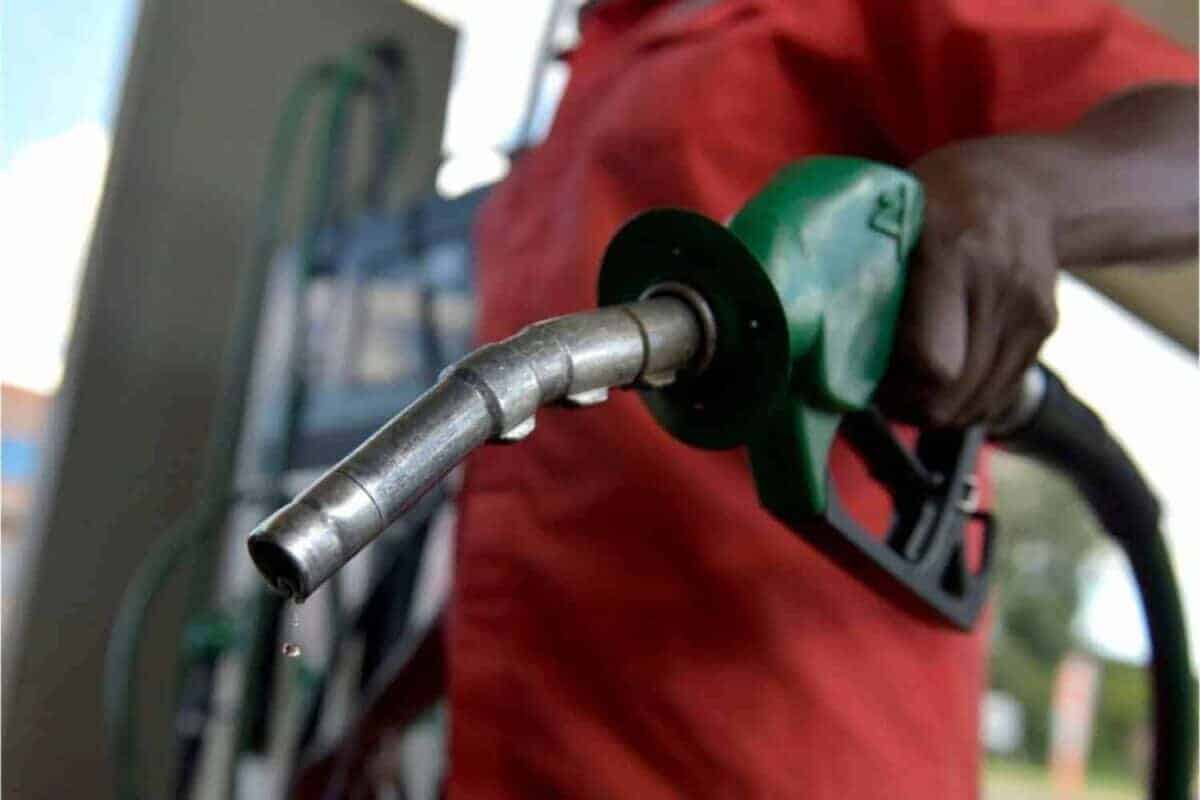
Diesel prices in South Africa have risen by more than 11%, raising concerns about renewed inflationary pressure. According to The Citizen Business, the increase could benefit Sasol and some coal producers, but freight operators are expected to bear much of the cost, with consumers ultimately affected as transport expenses feed through to prices.
The Citizen Business·September 2, 2026 at 11:48 AM
In South Africa, 47% of the population faces energy poverty, spending a significant portion of their income on inadequate electricity. The situation is worsening due to the growth of informal settlements, exacerbated by the Covid-19 pandemic. A study focused on the Qandu Qandu settlement examines the impact of a basic solar grant on providing cheaper electricity, raising questions about the viability of solar mini-grids as a solution for those leaving the traditional electricity network.
The Conversation Africa·June 24, 2026 at 1:51 PM