
The Private Sector Budget Review Dialogue has raised concerns about policy bottlenecks affecting Uganda's economic growth. Industry leaders argue that high operating costs and regulatory challenges hinder competitiveness, which is crucial for achieving the country's ambitious growth targets. They emphasize that enhancing business conditions may be as vital as increasing revenue mobilization to support Uganda's tenfold growth agenda.
AI summary. Verify with the original source.
Read full story at NTV Uganda ↗
Listen
Unlock audio summaries, audio summaries, AI chat, Wikipedia facts, and ad-free reading.
$3.99 / month · cancel anytime
Go PremiumBackground facts
Unlock wikipedia facts, audio summaries, AI chat, Wikipedia facts, and ad-free reading.
$3.99 / month · cancel anytime
Go PremiumSimilar stories

Uganda is poised for significant economic transformation with the introduction of the Tenfold Growth Strategy, as outlined in the Budget Speech for FY 2026/27. This strategy aims to propel the country towards becoming a 500-billion-dollar economy, marking a shift from incremental progress to ambitious growth. The government emphasizes a new approach focused on substantial economic leaps rather than gradual improvements, signaling a pivotal moment in Uganda's pursuit of prosperity.
The Scribe (UG)·June 19, 2026 at 5:38 AM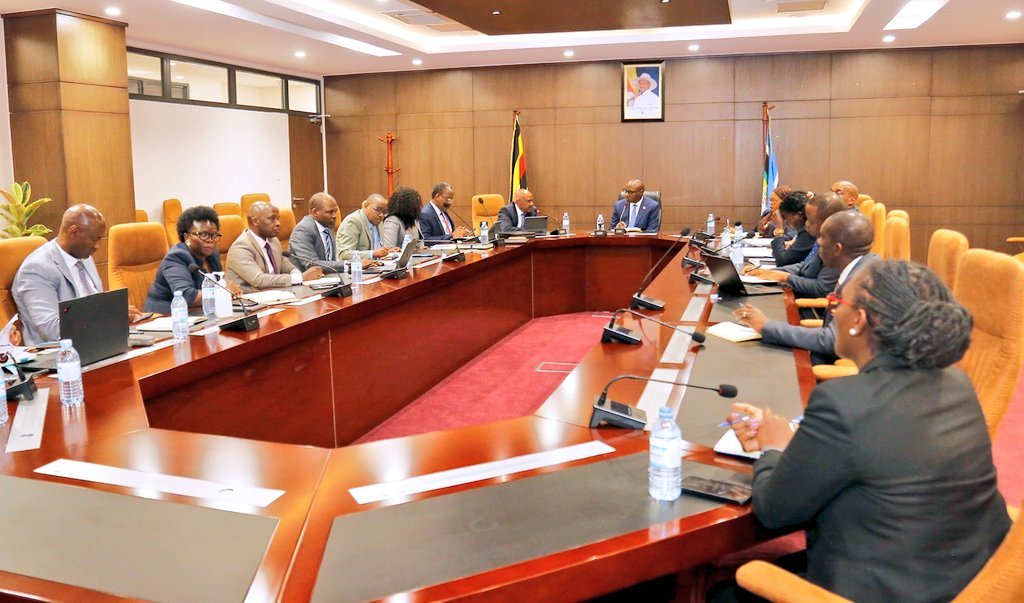
Uganda aims to achieve a 20% tax-to-GDP ratio by 2030, marking one of its most ambitious fiscal targets in decades. This goal is part of a new strategy developed by the Ministry of Finance, Planning and Economic Development (MOFPED) in collaboration with the Uganda Revenue Authority (URA).
Business Times (UG)·July 2, 2026 at 5:01 PM
In April, Uganda's private sector showed increased activity, with the headline purchasing managers' index rising to 55, its highest in five months, according to the Bank of Uganda's business tendency survey. Financial services experienced their strongest growth ever, indicating strong confidence in the sector, despite ongoing fuel-driven cost pressures. However, the survey also suggested that the underlying momentum may be losing some of its earlier strength.
Uganda Business News·May 6, 2026 at 8:39 AM
The Tanzania Private Sector Federation (TPSF) and the Confederation of Tanzania Industries (CTI) have expressed support for the business and tax reforms included in Tanzania's 2026/27 Budget, which feature faster VAT refunds, investment incentives, and regulatory simplification. However, they emphasized that to meet the Tanzania Development Vision 2050 goal of becoming a USD 1 trillion economy, the country's economic growth must exceed the projected 6.3% in 2026, reaching over 10% annually.
TanzaniaInvest·June 15, 2026 at 2:00 AM
Uganda's Finance Minister Henry Musasizi has introduced a five-pillar strategy aimed at transforming the country's economy into a USD 500 billion entity. During his first management meeting, he emphasized the need for a shift from gradual growth to a more rapid economic expansion, focusing on fiscal discipline and effective management of anticipated resources.
The Scribe (UG)·June 24, 2026 at 3:40 PM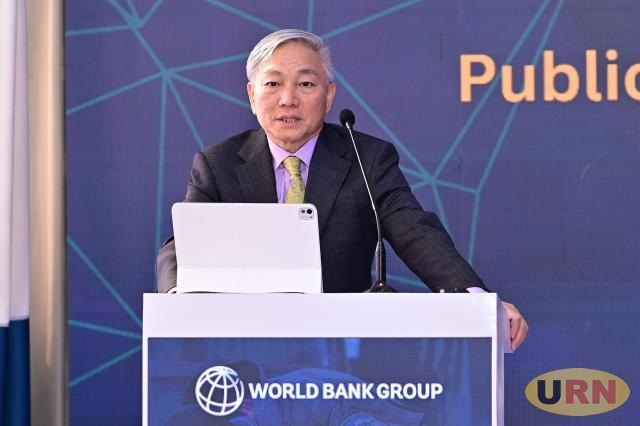
The World Bank has identified several challenges facing Uganda's construction sector, including weak regulation, insufficient political commitment, a lack of skilled labor, and bureaucratic procurement processes. These issues are hindering the sector's potential to create jobs and stimulate economic growth, despite its contribution of 12 to 17 percent to the country's Gross Domestic Product (GDP).
The Independent (UG)·July 5, 2026 at 6:00 AM