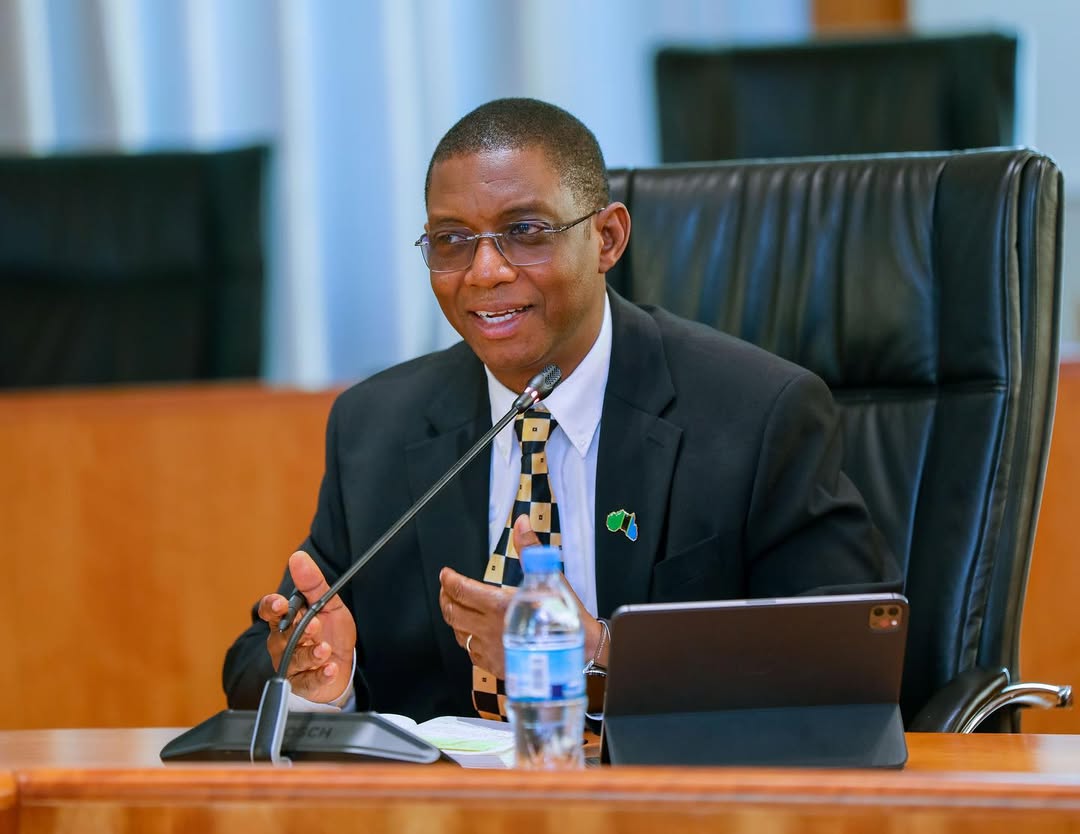
The Bank of Tanzania has reduced its liquid reserves while increasing its gold holdings, indicating a strategic shift in managing the country's foreign assets amid global economic uncertainties. As of May, the central bank's cash and cash equivalents were at 3.99 trillion Tanzanian shillings, a slight decrease from 4.03 trillion shillings at the end of the previous month, according to Daily News.
AI summary. Verify with the original source.
Read full story at Daily News (TZ) ↗
Listen
Unlock audio summaries, audio summaries, AI chat, Wikipedia facts, and ad-free reading.
$3.99 / month · cancel anytime
Go PremiumBackground facts
Unlock wikipedia facts, audio summaries, AI chat, Wikipedia facts, and ad-free reading.
$3.99 / month · cancel anytime
Go PremiumSimilar stories
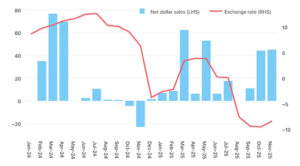
According to Tanzania Affairs, the Bank of Tanzania is positioned to sustain the stability of the shilling due to its strong gold reserves. This stability is attributed to the leadership of President Dr. Samia, who has carefully managed initiatives to support the economy in 2026.
Tanzania Affairs·February 1, 2026 at 12:52 AM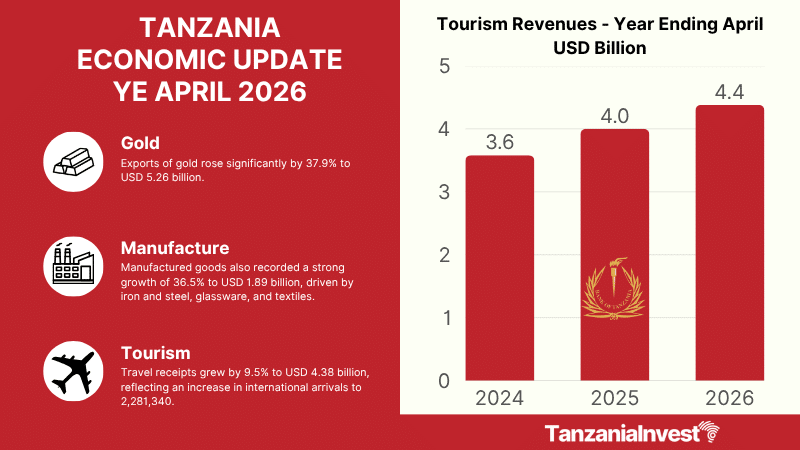
According to the Bank of Tanzania's May 2026 review, Tanzania's exports increased by 13.5% to USD 18.9 billion for the year ending April 2026, driven primarily by gold and tourism. The report also noted a rise in headline inflation to 4% due to higher fuel prices, a 23.6% growth in private sector credit, and an appreciation of the Shilling by 2.7%. Foreign exchange reserves reached USD 5.7 billion, sufficient to cover 4.4 months of imports.
TanzaniaInvest·June 12, 2026 at 2:00 AM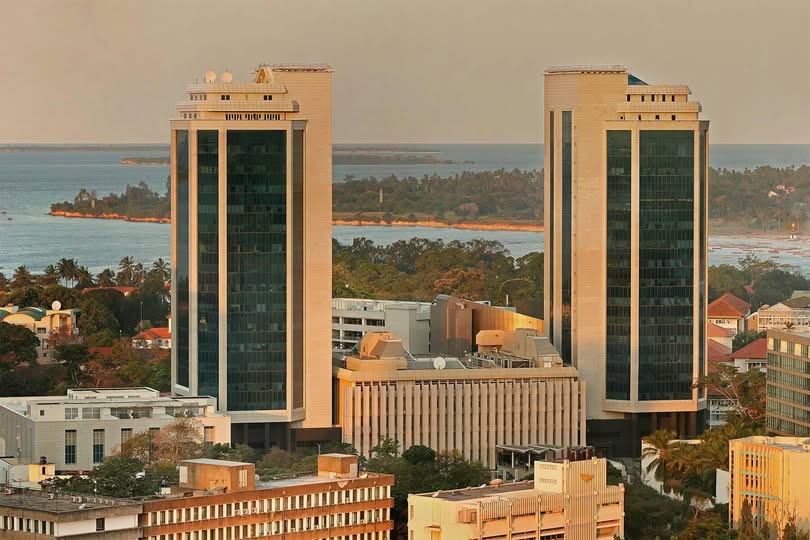
Economic and financial analysts have expressed support for the Finance Act, 2026, which allows the Tanzanian government to secure temporary advances from the Bank of Tanzania (BoT). They view this provision as a crucial economic shock absorber during emergencies, aligning with standard fiscal practices used in various countries to protect economies from unforeseen challenges.
Daily News (TZ)·June 25, 2026 at 5:48 AM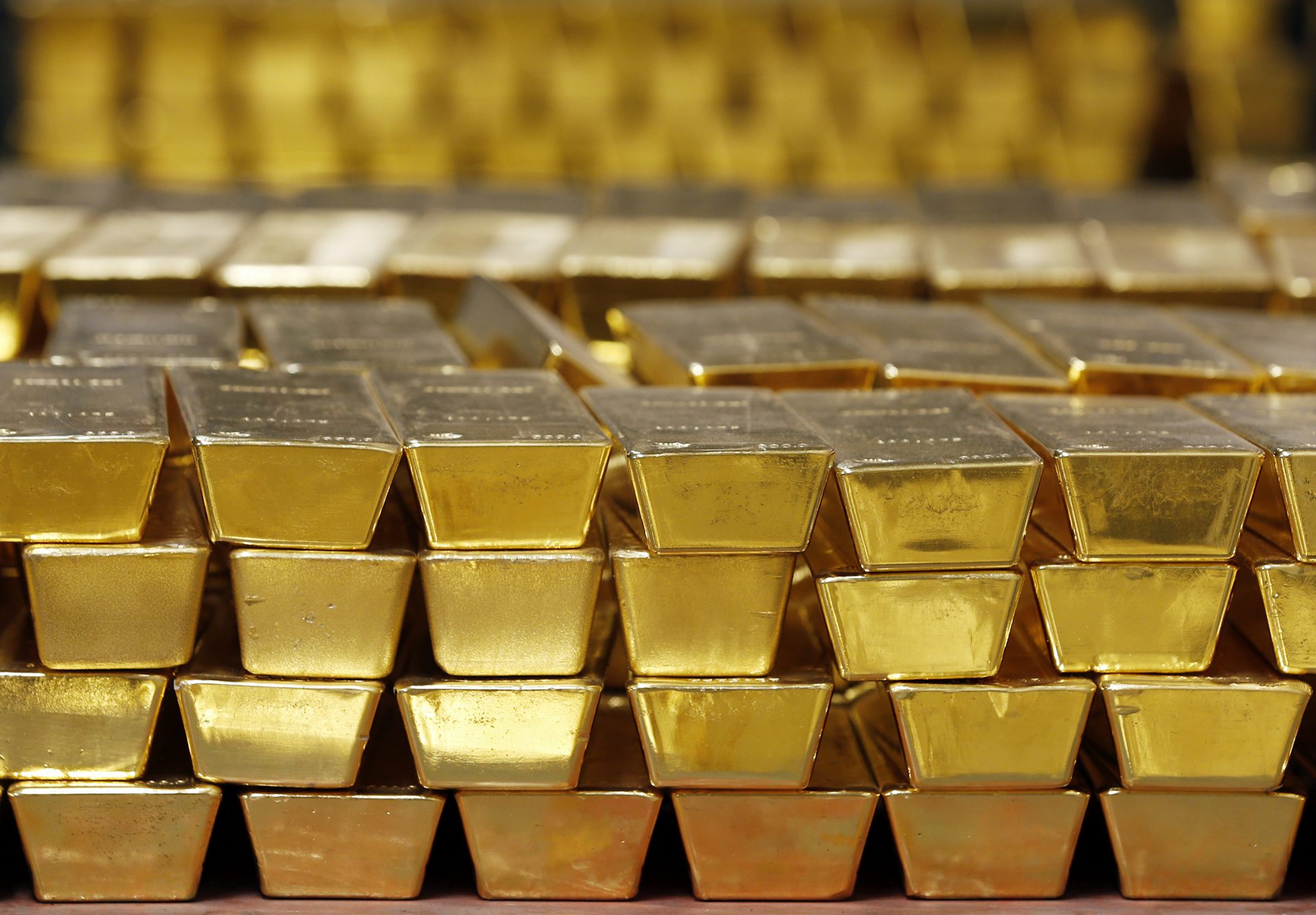
Central bank gold holdings have reached a 50-year high, prompting questions about the factors driving this increase in reserves. The rise in gold reserves may reflect broader economic trends and shifts in monetary policy, according to Moneyweb.
Moneyweb·July 4, 2026 at 2:00 AM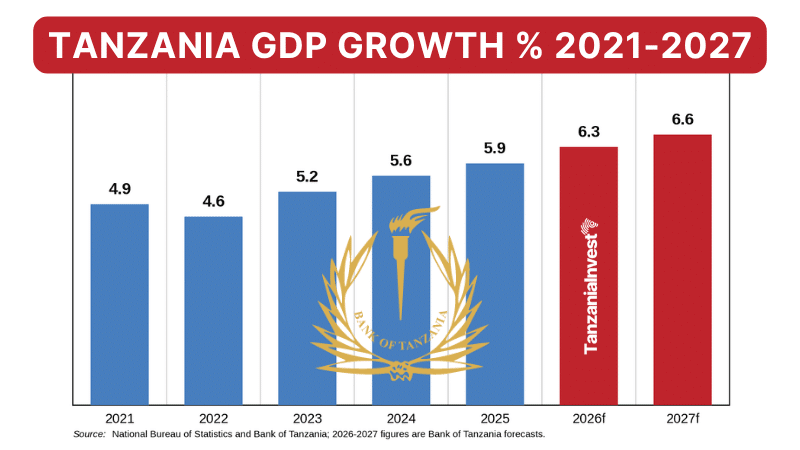
The Central Bank of Tanzania has projected a GDP growth of 6.3% for 2026 and 6.6% for 2027, driven by public and private investments as well as exports. According to its latest Monetary Policy Statement for 2026/27, key sectors contributing to this growth include agriculture, mining, tourism, and construction. Inflation is expected to rise but will remain within the target range of 3-5%.
TanzaniaInvest·June 18, 2026 at 2:26 AM
According to Daily News, global investors are increasingly choosing Tanzania as a strategic investment destination due to its political stability, access to regional markets, abundant resources, reliable infrastructure, and a supportive government. These factors are seen as more significant than just tax incentives, making Tanzania an attractive option for international manufacturing companies.
Daily News (TZ)·June 25, 2026 at 6:50 AM