
Rice dealers in Nigeria have announced new prices by location, following a significant drop in costs since January, according to Legit.ng. Imported long-grain rice has fallen by N15,000 to N55,000, while prices in September remained mostly stable. The report highlights shifting food costs across different markets in the country.
AI summary. Verify with the original source.
Listen
Unlock audio summaries, audio summaries, AI chat, Wikipedia facts, and ad-free reading.
$3.99 / month · cancel anytime
Go PremiumBackground facts
Unlock wikipedia facts, audio summaries, AI chat, Wikipedia facts, and ad-free reading.
$3.99 / month · cancel anytime
Go PremiumSimilar stories

Cooking gas prices have fallen across Nigeria following an increase in the supply of liquefied petroleum gas (LPG), according to a report by Legit.ng. The decline has brought relief to consumers in major cities including Lagos, Kano and Enugu. Prices had previously surged to around N2,500 in July amid market volatility, but the improved supply situation has since eased costs for households that rely on LPG for cooking across the country.
Legit.ng·September 9, 2026 at 9:26 AM
The prices of liquefied petroleum gas, or cooking gas, have decreased in various regions of Nigeria following a period of increase attributed to supply constraints. Retail outlets in Abuja reported a drop in prices, with costs falling between N1450 and N1500 per kilogram, down from N1700 at AA Shafa and Ranoil in Dutse.
Daily Post (NG)·July 4, 2026 at 9:36 PM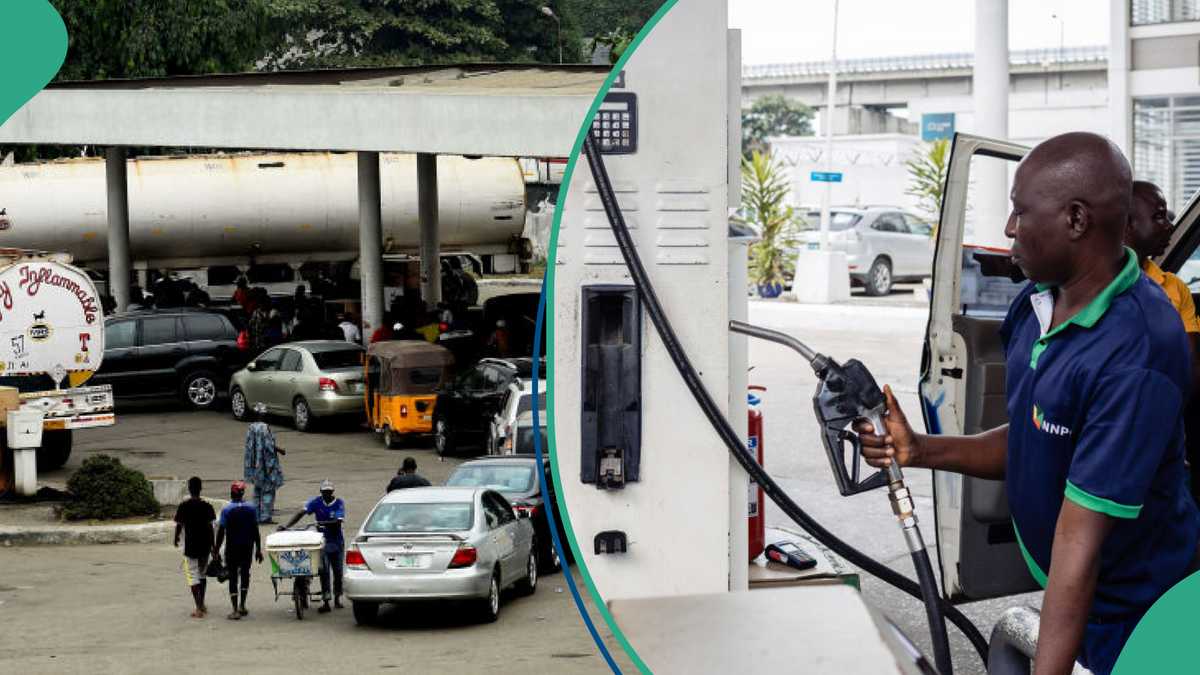
Filling stations in Nigeria, including MRS, AA Rano, and NIPCO, have decreased petrol prices following a reduction in the ex-depot price by Dangote Refinery to N1,075 per litre. This price cut has provided relief to consumers across the country.
Legit.ng·July 5, 2026 at 12:31 PM
The Federal Government of Nigeria has launched a new grain scheme aimed at supporting farmers by guaranteeing a minimum price of N350,000 per tonne for maize. According to Punch, the initiative targets about 11.5 million households and is intended to protect farmers from price volatility while strengthening food security. The programme forms part of broader government efforts to stabilise the agricultural sector and ensure farmers receive fair value for their produce across the country.
Punch·September 8, 2026 at 8:43 PM
A report by Tribune Online traces the rise of Nigeria's petrol prices from N20 per litre in 1999, at the start of civilian rule under President Olusegun Obasanjo, to more than N1,000 per litre in several parts of the country under President Bola Tinubu. According to the report, current pump prices vary depending on location, marketer and prevailing market conditions. The article reviews how fuel costs have evolved across successive Nigerian administrations over more than two decades.
Tribune Online (NG)·September 8, 2026 at 2:15 PM
Nigerian motorists could see cheaper petrol once the country's domestic refining industry becomes stronger, more competitive and financially sustainable, according to the Nigerian Midstream and Downstream Petroleum Regulatory Authority (NMDPRA). Petrol currently sells at about N1,310 to N1,350 per litre in many parts of Nigeria, after prices rose from previous levels. The regulator's comments link future fuel affordability to the growth and viability of local refining capacity.
Zalebs·September 7, 2026 at 11:40 AM