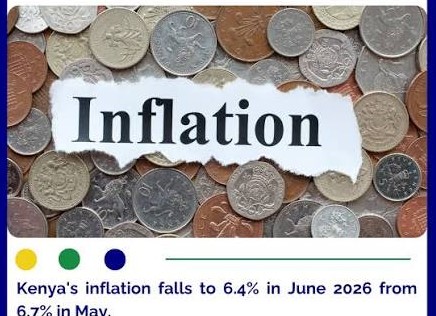
Kenya's inflation rate has decreased to 6.4%, indicating a moderation in price pressures after several months of high inflation. This change is expected to provide some relief to households, businesses, and investors, although the cost of living remains elevated. The latest economic indicators suggest a gradual stabilization of inflation, which could impact consumer spending, business planning, borrowing costs, and investment decisions, according to Sharp Daily.
AI summary. Verify with the original source.
Read full story at Sharp Daily ↗
Listen
Unlock audio summaries, audio summaries, AI chat, Wikipedia facts, and ad-free reading.
$3.99 / month · cancel anytime
Go PremiumBackground facts
Unlock wikipedia facts, audio summaries, AI chat, Wikipedia facts, and ad-free reading.
$3.99 / month · cancel anytime
Go PremiumSimilar stories
The annual inflation rate in Kenya decreased to 6.4% in June 2026, down from 6.7% in May, marking the first slowdown since February 2026. This decline was attributed to lower price increases in transportation and food, with transportation rising by 16.1% compared to 16.5% in the previous month, and food prices increasing by 8.6% versus 9.4%.
Business Today (KE)·July 2, 2026 at 6:17 PM
Kenya's financial markets in the first half of 2026 have shown resilience, providing investment opportunities in equities, fixed income, and currency segments despite global challenges. The Kenyan shilling has remained stable against the dollar, contrasting with the volatility experienced two years prior, with analysts attributing this stability to disciplined fiscal management, according to Sharp Daily.
Sharp Daily·July 3, 2026 at 12:16 PM
Kenya's sovereign debt market is under scrutiny as rising Eurobond yields indicate increasing borrowing costs and reflect investor confidence and fiscal sustainability. Despite improvements in global financial markets due to reduced geopolitical tensions and lower commodity prices, the upward trend in Kenya's Eurobond yields suggests ongoing concerns among investors, according to Sharp Daily.
Sharp Daily·July 5, 2026 at 11:46 AM
According to the latest Stanbic Bank Kenya Purchasing Managers' Index (PMI), Kenya's private sector activity improved in June, rising to 50 from 46.6 in May. This increase indicates a stabilisation in business conditions, attributed to rising sales.
Capital FM Business·July 3, 2026 at 9:22 AM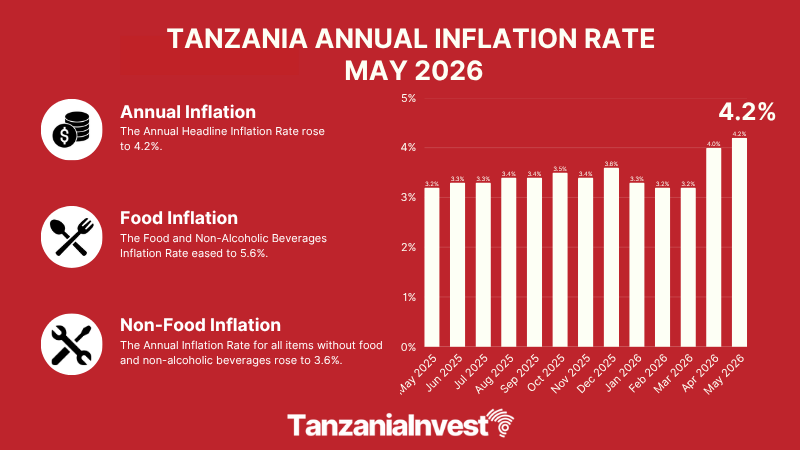
Tanzania's annual headline inflation rose to 4.2% in May 2026, up from 4.0% in April, primarily due to an 11.9% increase in transport prices linked to monthly fuel price hikes of 13.8% for diesel and 10.4% for petrol. Core inflation also increased to 3.4% from 3.1%, indicating broader price pressures beyond food and energy, according to the National Bureau of Statistics.
TanzaniaInvest·June 27, 2026 at 2:11 AM
As of July 2, Kenya's foreign exchange reserves stood at USD 14.047 billion, which is sufficient to cover six months of imports. This amount exceeds the statutory minimum requirement set by the Central Bank of Kenya (CBK). The information was detailed in the CBK's latest Weekly Bulletin released on July 3, indicating that the reserves provide a strong buffer against external economic pressures.
The Kenya Times·July 4, 2026 at 6:09 AM