
Kenya's Stanbic Bank Kenya Purchasing Managers' Index fell to 49.7 in August, slipping below the 50-point threshold and signalling a deterioration in operating conditions for the first time in three months. According to the survey, supply shortfalls and cost-saving measures led Kenyan firms to cut output and purchases during the month. A reading below 50 indicates contraction in private sector activity, suggesting renewed pressure on businesses after a period of relative stability.
AI summary. Verify with the original source.
Read full story at Business Today (KE) ↗
Listen
Unlock audio summaries, audio summaries, AI chat, Wikipedia facts, and ad-free reading.
$3.99 / month · cancel anytime
Go PremiumBackground facts
Unlock wikipedia facts, audio summaries, AI chat, Wikipedia facts, and ad-free reading.
$3.99 / month · cancel anytime
Go PremiumSimilar stories

According to the latest Stanbic Bank Kenya Purchasing Managers' Index (PMI), Kenya's private sector activity improved in June, rising to 50 from 46.6 in May. This increase indicates a stabilisation in business conditions, attributed to rising sales.
Capital FM Business·July 3, 2026 at 9:22 AM
According to The South African Biz, the South African Purchasing Managers' Index (PMI) decreased in June, with a second quarter average of 50.2, which is an improvement over the first quarter average of 48.3.
The South African Biz·July 1, 2026 at 3:22 PM
The Kenyan government has announced a package of measures to address a milk supply shortage that has reduced the availability of several processed milk brands on retail shelves. Livestock Development Principal Secretary Jonathan Mueke said inadequate rainfall in key agricultural zones had limited fodder supplies, creating the main bottleneck in raw milk production. Speaking at a press conference, Mueke said the state is working with dairy value chain stakeholders to support producers directly and stabilise supply lines.
Nairobi Wire·September 4, 2026 at 3:45 AM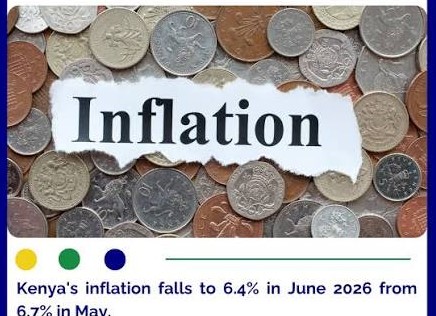
Kenya's inflation rate has decreased to 6.4%, indicating a moderation in price pressures after several months of high inflation. This change is expected to provide some relief to households, businesses, and investors, although the cost of living remains elevated. The latest economic indicators suggest a gradual stabilization of inflation, which could impact consumer spending, business planning, borrowing costs, and investment decisions, according to Sharp Daily.
Sharp Daily·July 3, 2026 at 2:17 PM
In April, Uganda's private sector showed increased activity, with the headline purchasing managers' index rising to 55, its highest in five months, according to the Bank of Uganda's business tendency survey. Financial services experienced their strongest growth ever, indicating strong confidence in the sector, despite ongoing fuel-driven cost pressures. However, the survey also suggested that the underlying momentum may be losing some of its earlier strength.
Uganda Business News·May 6, 2026 at 8:39 AM
The annual inflation rate in Kenya decreased to 6.4% in June 2026, down from 6.7% in May, marking the first slowdown since February 2026. This decline was attributed to lower price increases in transportation and food, with transportation rising by 16.1% compared to 16.5% in the previous month, and food prices increasing by 8.6% versus 9.4%.
Business Today (KE)·July 2, 2026 at 6:17 PM